
Evolution of Doctoral Education and Supervision in Business Schools across national boundaries
Key Topics: Generative AI and Degenerative AI, Supporting Candidates’ Research Projects and Writing Skills Development of Quality, Accreditation and Impact
January 7th-9th 2026,
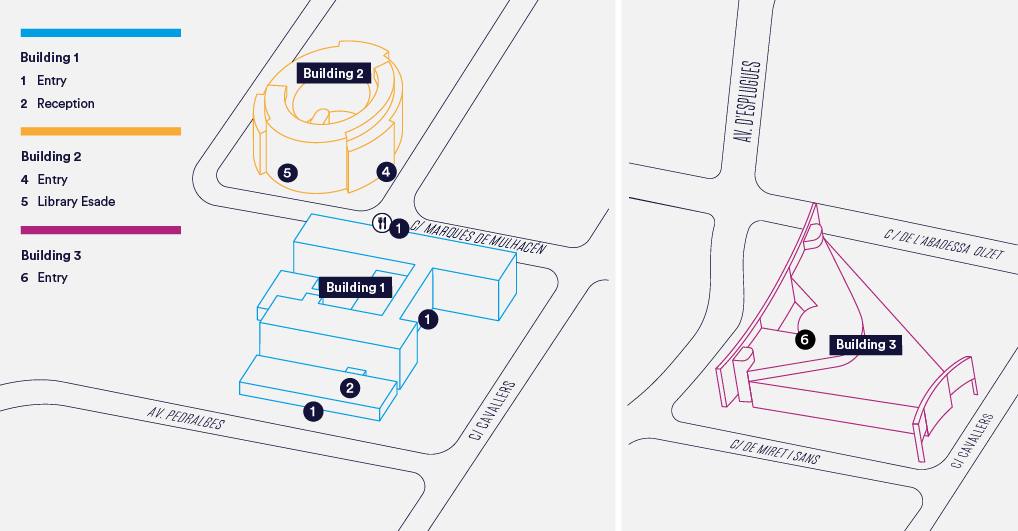
ESADE, Barcelona campus Spain Building 3 Av. Esplugues, 92-96 E-08034 Barcelona


An EDAMBA-EIASM Consortium on the (R)evolution of Doctoral Education in Management

Call for action
(R)Evolution of Doctoral Education
With the promised breakthrough and convergence of different branches of AI technology (e.g. transformer models, proximal policy optimization, retrieval augmented AI, agents), new general-purpose tools have emerged (e.g. ChatGPT, Claude, Perplexity, Gemini, Copilot, Mistral). What are the implications of these tools for research, critical thinking, publication processes, training, supervision and evaluation for doctoral students?
The reality for some is Generative AI is going to be a friend, for others this is all about Degenerative AI that is more a foe, undermining critical thinking and a better future for research degrees and their program Directors, doctoral students and their supervisors.
While many universities and schools have set up initiatives to address these questions management scholars and PhD candidates still face considerable uncertainty. When does AI really help and when it is just snake-oil? How to ensure that we, as degree program directors and supervisors help PhD students not to fall into counter-productive traps?
EDAMBA like EIASM has put a premium on quality of doctoral education and the role of supervisory teams remains central in ensuring a responsible and enhanced learning environment for doctoral programs, both PhD and DBA.
Our novel EDAMBA DBA Accreditation project (DBA-AP) has advanced distinctive standards and processes for ecosystem value creation and network impact beyond individual and traditional accreditations that are institution-centric and backward looking.
This 14th EDAMBA – EIASM Consortium will provide a venue for further discussion and reflections on this community driven impact assessment measuring societal and economic value with community leaders integrated from the early critical phases of DBA-AP’s development.
Further the unprecedented levels of fragmentation and divergence in terms of national and regulatory policies in the EU, and between Europe, the USA, and beyond, including high levels of economic, demographic, social and geopolitical uncertainty, are combined with the evolution of slow moving but consequential biophysical and social variables (e.g. demography and climate change). What are the implications of these global / glocal challenges for doctoral education in management and related disciplines?
The 14th edition of the winter EDAMBA-EIASM consortium specifically aims to help. PhD/DBA directors , senior and junior supervising faculty tackling these issues by bringing together participants from different countries of our global network, as well as different institutional settings, level of experience and expertise in doctoral supervision, building on evidence based knowledge.
A key premise of the consortium, as in previous editions, is that informed conversations across programs backed by:
PhD directors, senior faculty and junior faculty exchanges from a broad range of management and business studies evidence-based knowledge from adjacent fields (e.g. education research, computer science and engineering) conversation with journal editors.
Practical cases both leading to successful completion, or failure and withdrawal from doctoral study.
can all help us to put in perspective our own practices and make choices that are most adapted to our own specific individual institutional context and field of research.
Experienced faculty reflect on numerous successful completions as well as problem cases, and how they deal with the challenges of professionalization for both PhD and DBA candidates across multiple career paths.
Junior faculty participating in the consortium interact in a safe environment and learn from experienced faculty about different perspectives on supervision beyond their specific experiences with their former supervisors across different schools. It is an opportunity to learn about how to socialize candidates into co-authorship, evolving editorial processes, collaborating with other supervisors across disciplinary boundaries,
Program directors reflect on their experiences and learn about supervisory practices in other institutions and the transformation of doctoral education across national boundaries, especially with the rise of AI and related emerging technologies. Enhancing quality and accreditation of DBA programs is an important project for our community that this Consortium with provide a unique and timely opportunity to build bridges for impactful research across boundaries.
Target Audience
Business schools/University PhD and DBA program directors who aim to enhance the quality of their program and exchange with faculty beyond their specific institutional setting.
Business schools/University Faculty with supervisory experience who aim to update and challenge their practice of supervision, get a fresh perspective from junior faculty beyond their own former students.
Business schools/University Junior faculty without supervisory experience who aim to learn about different supervisory styles, how the training of researcher will evolve in the future.
Faculty
Consortium Faculty
Prof. Daniel Arenas, ESADE (Spain)
Prof. Dimitris Assimakopoulos, Burgundy School of Business (France) and Vaasa University, Innolab (Finland)
Prof. Francois Collet, ESADE (Spain)
Prof. Annette Boom, Copenhagen Business School, (Denmark) TBC
Prof. Radu Godina, NOVA School of Science and Technology, Lisbon (Portugal)
Prof. Ulrich Hommel, EBS University of Business and Law, and Xolas Advisors (Germany)
Prof. Dagmar Monett, Computer Science Dept., Berlin School of Economics and Law (Germany)
Organising Committee
Francois Collet, Dimitris Assimakopoulos, Daniel Arenas, Pilar Gallego (ESADE), Pavlos Dimitrakos (EIASM)
Programme Overview January 7th
January 7th
8:30-9:00 Registration
9:00-9:15 Welcome and Introduction
9:15-10:45 MODULE 1: Supporting the research project and skill development of doctoral candidates
Group Discussion on the practice of supporting research projects and skill development and Supervisors and Students Expectation.
Evidence-based Discussion in Plenary.
Group work facilitated by Francois Collet & Daniel Arenas (ESADE) and Dimitris Assimakopoulos (EDAMBA President, BSB)
10:45-11:00 Coffee Break
11:00 – 12:30 MODULE 2: Generative AI in Practice: Reasoning Models, Agents and the stagnation of AI models.
Plenary Discussion facilitated by Radu Godina (Nova).
12:30-14:00 Lunch Break
14:00-15:30 MODULE 3: The critical use of Degenerative AI in Doctoral education
Keynote Lecture and Discussion by Dagmar Monett (Computer Science Dept., Berlin School of Economics and Law).
15:30-15:45 Coffee Break
15:45-17:15 MODULE 4: Current Challenges and (R)Evolution of Doctoral Education
Discussion with PhD directors, DBA directors and Supervising faculty. A comparative approach
The use of AI in research and supervision.
Global Supply, Demand and Mobility.
Impact and Quality enhancement
Programme Overview January 8th
January 8th
9:00-10:00 MODULE 5: Quality of Doctoral Education. The EDAMBA DBA Accreditation standards
Activity Facilitated by: Dimitris Assimakopoulos (EDAMBA President, BSB) and Ulrich Hommel (Xolas and EBS)
10:45-11:00 Coffee Break
11:00-12:30 MODULE 6: Supporting Writing and Feedback and Supporting the Research Process in the Age of AI: Evidence-based group discussion
Mobilizing Evidence Based Knowledge and Work Group Assessment.
Activity Facilitated by: François Collet and Daniel Arenas (ESADE).
12:30-14:00 Lunch Break
14:00-15:30 MODULE 7: The challenge of inter-disciplinary work
Activity Facilitated by: Gerardine Doyle (UC Dublin, Smurfit School of Business)
Afternoon and Gala Dinner:
Optional Cultural Activity: THE GOTHIC QUARTER. A walking tour.
Consortium Dinner at 8pm
Programme Overview January 9th
January 9th
9:00-10:30 MODULE 8: A discussion Management Journal Editors
This session aims at fostering discussion with editors of high-quality management journals (AMR, JIBS, Management Learning, etc.), how we can help doctoral candidates and how AI is impacting submission quality and reviewing processes.
10:45-11:00 Coffee Break
11:00-12:30 MODULE 9: Plenary discussion about the R(e)volution of doctoral education.
Facilitated by Dimitris Assimakopoulos
12:30 Lunch (optional) and Departure
Registration & Fees
Please submit your statement of commitment to participate to the 14th EDAMBA-EIASM Consortium on Doctoral Supervision.
Fees
For participants affiliated with an institution that is member of the EIASM Academic Council and or/participants affiliated with an institution that is member of EDAMBA: €460.
For all other participants: €560
EIASM Academic Council members are listed on the EIASM website here.
EDAMBA Members are listed here.
The fee does not include travel to Barcelona, transfers to ESADE Business School or hotel accommodation. Please make your own arrangements for travel, transfers and accommodation. The fee includes coffee breaks and lunch at ESADE Business School on January 7-9, 2025 and dinner on January 8, 2026.
Registration
Registrations will open soon.
Deadline: November 9, 2025
RECOMMENDED HOTELS
The hosts have some secured lower prices in some hotels in the area.
Please consult this document to book your accommodation
How to reach the venue
The site is easily reachable by public transport from central Barcelona.
How to get there – Barcelona Campus
Esade is located 15 minutes from the Barcelona-El Prat Airport by car.
The campus can be easily accessed by car or public transport from the city’s historic district or outside the city.
Bus
City buses with stops near Esade: 63, 68, 78, 113, H4, V5.
Metro
L3 / Tram T1-3 (Palau Reial).
Ferrocarrils de la Generalitat de Catalunya
Reina Elisenda (L12) station: 250 m from Esade.
Administration
For queries regarding this event, please contact
Mr. Pavlos Dimitrakos
EDAMBA
pavlos.dimitrakos@eiasm.be